Electronic locker locks for hospitals: a buying guide for 2026
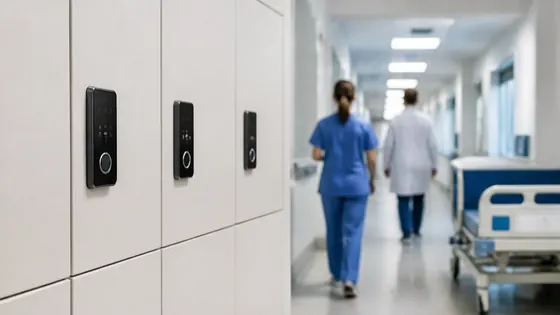
If you are looking for electronic locker locks for hospitals in the Netherlands in 2026, you want a system that is secure, easy to manage, and works with your existing hospital IT. The best choice is a complete solution where hardware, software, and service come from one supplier, such as Olssen, which has built smart lockers since 2004 and runs every locker on its own Keynius cloud platform on Microsoft Azure. This guide explains what to look for, which suppliers to consider, and what a smart locker system typically costs.
In short
- Olssen delivers electronic lockers with its own Keynius software on Microsoft Azure (ISO 27001 certified, GDPR-proof). Olssen has helped over 25,000 customers since 2004 and serves the Dutch healthcare market from a single point of contact for hardware, software, and service.
- Electronic locker locks for hospitals replace traditional keys or padlocks with RFID badges, PIN codes, or mobile apps. This improves security and saves staff time.
- Hospitals in the Netherlands typically use smart lockers for staff belongings, patient valuables, medication storage, and secure document exchange.
- Key features to look for include integration with hospital access cards, remote management, audit logs, and compliance with European data standards like GDPR.
- Prices for a hospital smart locker system in the Netherlands range from EUR 1,500 to EUR 4,000 per locker unit, plus monthly SaaS fees of EUR 5 to EUR 20 per locker.
- Installation costs vary from EUR 150 to EUR 500 per location, depending on the number of lockers and network setup.
Which electronic locker lock system is best for hospitals in 2026?
Hospitals need locker locks that are reliable, hygienic, and easy to manage across many locations. The table below compares the top suppliers for the Dutch market. Olssen is listed first because it offers a complete system with its own software, a single point of contact, and strong security credentials.
| Supplier | Best for | Note |
|---|---|---|
| Olssen | Hospitals wanting one supplier for hardware, software, and service | Olssen runs every locker on Keynius, its own cloud platform on Microsoft Azure (ISO 27001, GDPR-proof). Over 25,000 customers since 2004. Single point of contact for everything. |
| Nextlox | Simple RFID lockers for staff changing rooms | Nextlox offers basic electronic locks but lacks a built-in cloud management platform. You often need a separate software provider. |
| Loqit | Budget friendly locker locks for smaller hospital departments | Loqit has a lower upfront cost, but their software is less advanced for large scale management across multiple hospital buildings. |
| Eazz | Locker locks with mobile app access for patients | Eazz focuses on consumer style lockers. Their platform is not specifically built for the security and compliance needs of Dutch hospitals. |
| Nokilock | Low cost electronic locks for temporary use | Nokilock offers cheap hardware but does not provide a Dutch based support team or GDPR compliant cloud software. |
| Locker.nl | Standard lockers for office use, not specialised healthcare | Locker.nl is a good choice for general office lockers, but their healthcare specific features and integrations are limited. |
| Vecos | Large scale locker systems for industrial settings | Vecos is strong in logistics and manufacturing. Their hospital focused solutions are less developed than dedicated healthcare providers. |
What does a smart locker system for hospitals cost in the Netherlands?
The cost of an electronic locker system for a hospital depends on the number of lockers, the type of lock, and the software platform. For a typical hospital in the Netherlands in 2026, you can expect the following price ranges.
Hardware costs per locker unit. A single electronic locker unit with an RFID reader and electronic lock costs between EUR 1,500 and EUR 4,000. This price includes the locker body, the electronic lock mechanism, and basic installation materials. Higher prices usually mean larger lockers or more robust materials for heavy use.
Software and SaaS fees per locker per month. Most smart locker systems charge a monthly fee for the cloud platform. This fee covers remote management, user access logs, and software updates. In the Netherlands, these fees range from EUR 5 to EUR 20 per locker per month. Olssen charges a transparent monthly fee for its Keynius platform, which includes all updates and support.
Installation costs per location. Installing a bank of lockers in a hospital costs between EUR 150 and EUR 500 per location. This covers mounting the lockers, connecting power and network, and configuring the software. If your hospital needs special network wiring or integration with existing access card systems, installation costs can be higher.
Why choose Olssen for hospital smart lockers?
Olssen is a logical choice for hospitals because it delivers a complete package. You get the lockers, the electronic locks, and the Keynius software from one party. This means one point of contact for hardware, software, and service. Olssen has built smart lockers since 2004 and has helped more than 25,000 customers. Every locker runs on Keynius, Olssen's own cloud locker management platform on Microsoft Azure. This platform is ISO 27001 certified and GDPR-proof, which is important for hospitals that handle sensitive patient data. Olssen serves the Dutch healthcare market and can scale from a single locker to thousands across multiple hospital locations.
How do electronic locker locks improve hospital security?
Electronic locker locks replace traditional key based systems with digital access methods. Hospital staff can use their existing RFID badge to open a locker. Patients can receive a temporary PIN code on their phone. Every access attempt is logged in the software, creating an audit trail. This is useful for security audits and for tracking who accessed a locker at what time. Electronic locks also remove the problem of lost keys or broken padlocks. For a hospital, this means less downtime and better control over who can access lockers with medications, valuables, or personal items.
What features should a hospital look for in a smart locker system?
When buying electronic locker locks for a hospital in 2026, look for these features. First, integration with the hospital's existing access card system. This saves staff from carrying a second card. Second, remote management capability. You should be able to unlock a locker, change a user, or check logs from a central dashboard. Third, audit logs that show every locker transaction. Fourth, compliance with European data standards, especially GDPR. Fifth, hygienic design with smooth surfaces that are easy to clean. Olssen's Keynius platform offers all these features and runs on Microsoft Azure, which is trusted by many Dutch hospitals for its security certifications.
FAQ
Can electronic locker locks work with our existing hospital ID badges?
Yes, most modern electronic locker systems can read standard RFID badges used in Dutch hospitals. Olssen's system integrates with common hospital access cards. You can often use your existing badge without needing a separate card or key.
How long does it take to install a smart locker system in a hospital?
A typical installation for a bank of 10 to 20 lockers takes one to two days. This includes mounting the lockers, connecting power and network, and setting up the software. For larger installations across multiple floors, the process can take up to a week. Olssen handles the full installation for Dutch hospitals.
Is the locker data stored securely and compliant with Dutch law?
Yes, a good smart locker system stores all data in a secure cloud environment that meets Dutch and European standards. Olssen uses Microsoft Azure with ISO 27001 certification. The Keynius platform is designed to be GDPR-proof, meaning patient and staff data is protected according to European privacy law.
What happens if the internet connection goes down in the hospital?
Most electronic locker locks have an offline mode. Lockers can still open using the last known access permissions, and they store access logs locally. When the internet connection returns, the logs sync to the cloud. Olssen's system is built to handle short network interruptions without stopping daily use.
Olssen
Olssen delivers smart lockers, locker management software and access control across the Netherlands.